
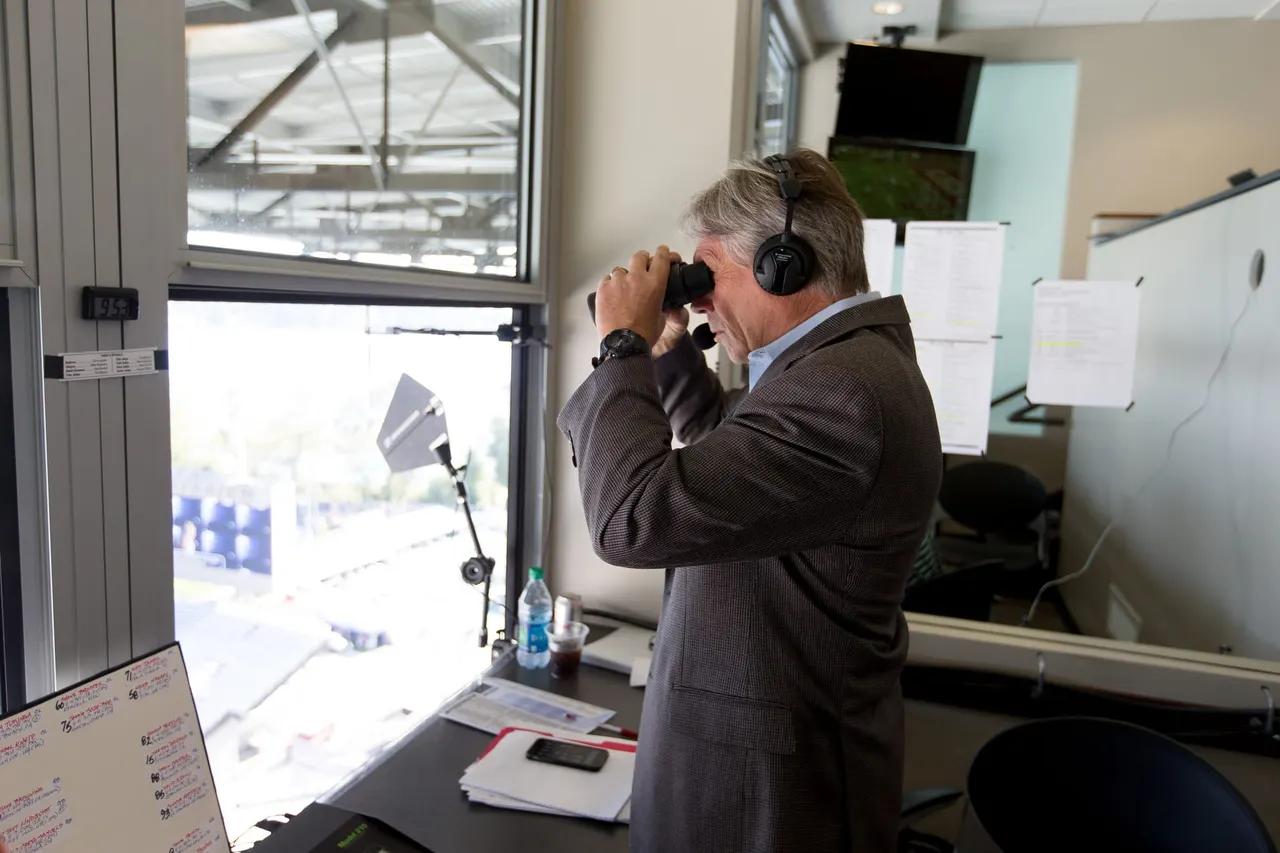
NORMANDY PARK, Wash. — There is a single trophy displayed in the retired broadcaster’s home, and it does not bear his name. Background, son of Khozan, was 4 years old when he covered eight furlongs in 1 minute, 36.67 seconds on an 80-degree day in August 2021, winning the 86th Longacres Mile at the Emerald Downs racetrack in Auburn. Bob Rondeau and his wife, Molly, owned the horse then. “He was kind of the foundation of the empire,” Rondeau said. “He was the first horse we bought when we got back into it.”
So there it is, the silver prize resting modestly on the end of a mantle, framed by a painting and a window. The bobble heads? Rondeau figures he has about 10 left. They’re in a box in the garage; every now and then, folks ask if he might supply one of the dolls — made in his image and given away to fans at the 2017 Apple Cup, his final home game — perhaps, say, as an auction item.
He obliges, but says you’ll never find one inside his house. Same goes for any commemoration of his broadcasting honors, of which there have been many.
“I don’t have a room devoted to me, with all my awards and plaques,” Rondeau said. “I’ve never been one to pay tribute to myself in my own house. I don’t need that.”
A couple years ago, Chris Petersen remarked to me about a lie some football coaches tell themselves: “Coaching is what I do, but it’s not who I am.”
The more competitive and high-profile the job, Petersen reasoned, the more those lines blur, until your profession is so all-consuming that your personal identity can’t be divorced from your work.
Set aside the fame and fortune, and is it really so different for the rest of us? Do you take work home with you, in either the literal or metaphorical sense? Allow a rough day at the office to linger? And rather than daydream about retirement, do you instead fear the idea of waking up without destination? Of nobody expecting anything from you? Of idle time?
Rondeau, now 75, knows this might be a conundrum for some. Reflecting on his retirement during a conversation earlier this summer, the play-by-play legend (sorry, Bob, but we call it like we see it) said he experienced no such anxiety.
“That was never going to be an issue with me,” Rondeau said. “Ever.”
The Washington Huskies have played seven football seasons since Rondeau stepped down, plenty long enough for Tony Castricone to settle into the radio booth which now bears his predecessor’s name. UW has changed conferences and hired three football coaches and two men’s basketball coaches in that time. The school still buzzes Rondeau for video narration duties — he provided the voiceover last year ahead of UW’s Big Ten debut vs. Northwestern — but the radio operation has moved on without the guy who wore the headset for the better part of four decades.
Rondeau has moved on, too, and quite willingly. He already loved racehorses and fly fishing and gardening, and now can invest fully in those endeavors and many others, like spending time with his three grandkids — he’s developed what he calls a “vicious rivalry” in the game of cornhole with his oldest grandson — and traveling the world with Molly, to England and Iceland and Spain and Portugal and Ireland and France and Monte Carlo and the Bahamas and Italy, twice. (Molly is still “very much employed,” as Rondeau puts it, as a senior vice president for an insurance agency. “When she works, she busts it,” Rondeau said, “but she’s got some flexibility.”)
He misses game days — “the final exam for that week,” he says, and Rondeau always was the perfectionist striving for an A — but doesn’t long for them. He was flattered by the adulation that accompanied his retirement, and appreciative of every fan who has ever approached with a story about listening to him call a game. Ever the newsman, though, he always was a little self-conscious about being the center of attention. Rondeau studied journalism in college and began his career as a reporter and anchor. He never wanted to be the story. He wanted the Huskies to win, of course, but says, “I always wanted to be a reporter first, and a broadcaster second.”
Perhaps it is with the same spirit that he surmises: “It was a very defining part of my life, but not in totality.”
It was around the end of Washington’s 2016-17 basketball season that Rondeau decided the 2017 football season would be his last. “I had an inkling the season before, but wasn’t quite there,” he said.
The March 2017 firing of hoops coach Lorenzo Romar, while not the determining factor, at least made for ideal timing.
“The last thing I wanted to do was have to be carried out of the broadcast booth on a stretcher because I refused to leave,” Rondeau said, “and was granted a presence because of longevity and all that. I wanted to go out while I still had some game.”
He was 67, an unremarkable retirement age for many working Americans, but maybe not so much for professional sports broadcasters, some of whom work well into their 70s or 80s. No doubt, Rondeau stepped down while he could still bring it. He probably still can. But he says he did start to notice little things, even if listeners might not have, evidence mostly of an exceptionally high personal standard. “Maybe not quite so quick with a name, not quite so quick with finding a word,” Rondeau said.
“I loved it all the while,” he said, “and at the end, I wasn’t loving it maybe quite as much as I would have preferred. There got to be a little bit of sameness that wasn’t always there.”
He believes his exit was as well-timed as his arrival. Then the sports director at KOMO Radio, Rondeau became part of UW broadcasts in 1978, on the heels of Washington’s first Rose Bowl victory under Don James, and became play-by-play man amid the Huskies’ back-to-back Rose Bowl run in 1980-81. A decade later, he called the greatest season in school history, the second of three consecutive trips to Pasadena.
“That probably enhanced my standing, above and beyond the pure notion of what I was doing,” Rondeau said of his association with the James years.
Times have changed. Rondeau isn’t a social media guy — “I wouldn’t have done well in that environment,” he says — and he can’t imagine enduring the stops and starts wrought by the COVID-19 pandemic, nor the tumult of the NIL era. He’s still miffed, too, about the Pac-12 disintegrating, and about Washington’s role in the breakup, which he terms “massively, massively unfortunate, and, in my pollyannish way, massively unnecessary.”
“I totally understood it,” Rondeau said, “but I was really disappointed. … I would be far less enamored of playing in the Big Ten than playing in a more westerly direction. I just think it’s silly. I’m happy to have missed out on all that.”
He likes how Castricone has made the job his own — ”different from what I would do, but that’s as it should be,” he said — and provided counsel to longtime colleague Elise Woodward when she made her UW football play-by-play debut in 2021, with Castricone on parental leave. (Rondeau’s in-game text messages, he said, mostly were reminders to note which yard-line the ball was on.) Rondeau says he might attend two or three games each season, and he made the trip last year to Indiana with Molly, who is from the state and still has friends and family there. They traveled to Houston for the national championship game, too.
He’s still a fan, but UW football no longer receives top priority on his calendar, even if one of his primary interests in retirement did land him on the sports page.
Rondeau grew up in Denver, and his parents later bought a horse farm outside Longmont, about an hour north, and so they came to board and race Quarter Horses at a local track. While in college at CU-Boulder, Rondeau would visit during the weekends, cleaning stalls with his dad in exchange for a clean load of laundry. The animals fascinated him — their athleticism, their power, the variance in their racing personalities. The seed was planted then, Rondeau said, that “by the time I had the wherewithal to be able to own one, that would happen.”
He bought his first horse in 1983 — Niki Tora, a filly, won her first start at Longacres — and in retirement has reentered the game in earnest. Horses come and go; his stable swelled to as many as five at its peak, but he and Molly are currently horseless (they did own a 6-year-old, Call Me Fast, and Backtrack, a 3-year-old full brother of Background, who were recently claimed at Saratoga). Rondeau said they’ll be shopping again for upcoming meets in Kentucky.
He likens it to owning your own sports franchise.
“You can be absolutely on top of the world tonight, and bottom of the barrel tomorrow morning,” he said. “Your horse wins a race tonight, and in the morning, the X-rays aren’t good, and your horse is done. It happens. It’s happened to us.”
When Rondeau and his wife got back into horse racing after his retirement, they set an annual budget for the endeavor, and haven’t needed to supplement it since. Whatever the horses win, Rondeau says, he puts back into the business. Watching Background win the Longacres was a special thrill. So, too, are any victories at storied tracks Churchill Downs and Keeneland (their horses live and train in Kentucky). Two of their horses have netted more than a half-million dollars in career winnings.
“There have been a lot of abject failures along the way, too,” Rondeau said, “to the point where we’re kind of paycheck to paycheck, paying the bills. But so far, so good.”
On race days, money is the furthest thing from Rondeau’s mind. The best part of the business, he said, is “being able to walk up to the stall, pat ‘em on the cheek, get to know them and try to understand them a little bit. When you play sports, you get butterflies before the game. When they’re loading into the starting gate, it’s that exact same feeling. You’re so into the moment.”
He calls thoroughbred horses “the coolest animals on the planet,” and assigns similar status to steelhead when it comes to fish (aside from, say, Alaskan trips to catch halibut and king salmon, Rondeau is mostly into catch and release). Rondeau has been tying his own flies since college, but says he’s gotten much better at it since retiring — he has a station set up for it in his garage — and over the last decade or so has learned how to use two-handed rods.
He goes back nearly 50 years with some of his fishing buddies, a core group of whom still travel together. Early trips were made via Volkswagen van to places like Silver Creek and Sun Valley. They eventually branched out to Christmas Island and Venezuela and Cuba, and to Bolivia for golden dorado, which Rondeau submits as a close second to steelhead for coolest fish. Since we spoke, he’s taken another couple trips to British Columbia, and regularly fishes the Olympic Peninsula.
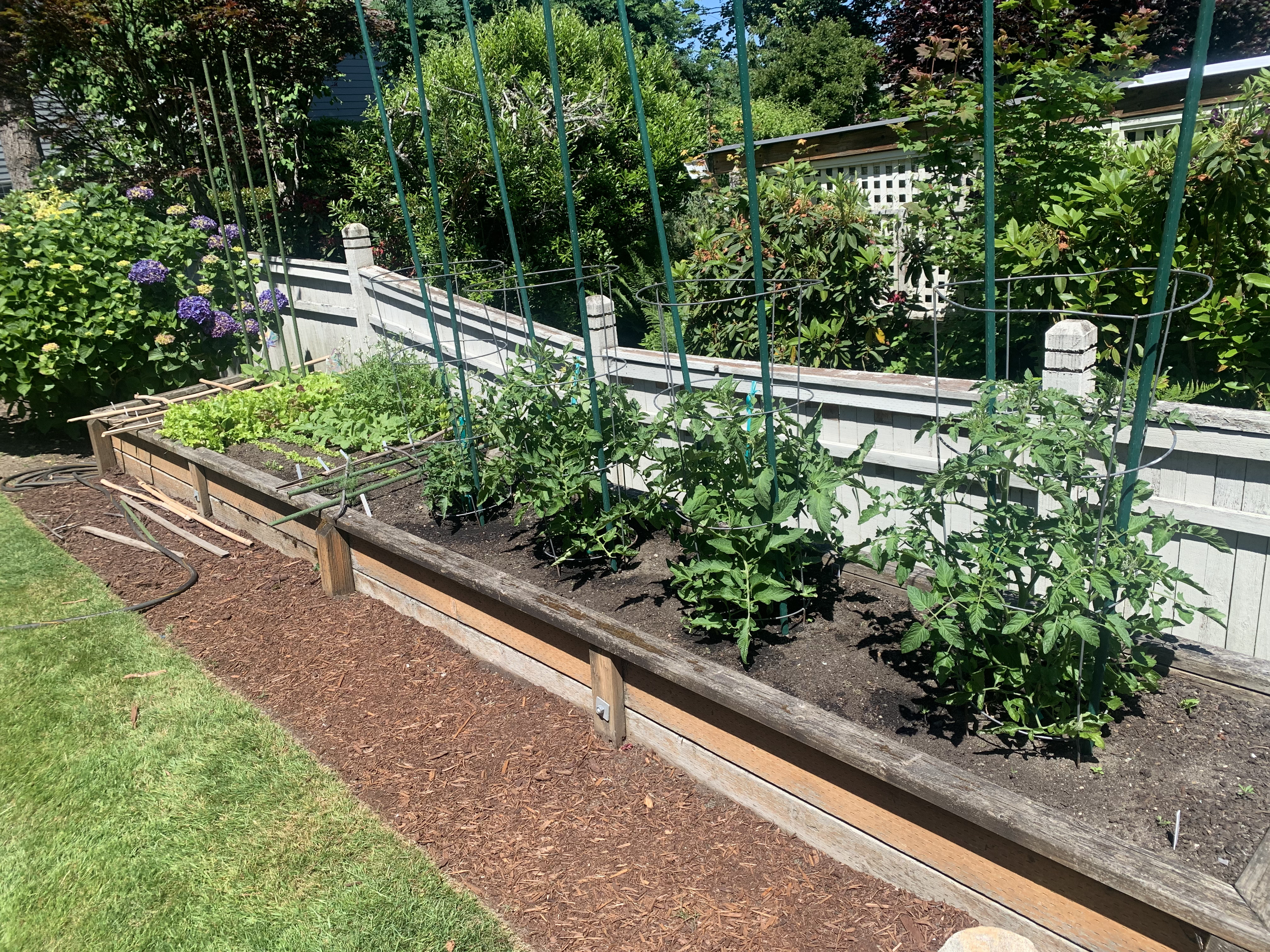
Then there are the tomatoes. Rondeau grows them in his backyard and has become something of an expert at canning and storing them (this hobby also precedes his retirement). “There is no substitute for homegrown tomato sauce,” he said. “You can’t buy anything in the store that comes even close, in my opinion.” Craig Heyamoto, the longtime head of UW’s football stats crew, is a good friend and neighbor. Rondeau walked me over to Craig’s backyard, where a larger crop of tomatoes grow in sunny conditions that Rondeau deems perfect for a vegetable garden. (The two share produce. During our visit, Rondeau half-jokingly chides him for allowing dirt to get on the leaves.)
My parents retired together, on the same day, just a couple months before Rondeau called his last game. They don’t own racehorses, and they don’t fish, but the verve which underpins their post-employment life is inspiring nevertheless. My dad used to play golf only on spring and summer weekends; now, he gets in about 100 rounds per year at the public course near their house. It’s maybe a 2-minute drive, via golf cart, from driveway to tee box (Rondeau said he used to golf more often, but aches and pains have kept him away).
For a while, my mom volunteered as an ESL tutor at the local library. My dad volunteers at a local food bank. They travel regularly, to national parks in Utah and Arizona and Montana. They watch concerts at Lake Sacajawea in the summer. Also, they grow and pick blueberries in their front yard, and follow the Lower Columbia College basketball teams at home and on the road. They stay up later than they ever did when I was growing up — later than I do now, in fact. A few weeks ago, they took my daughter for a sleepover on a week night.
There is fulfillment to be had at all stages of life, but isn’t this the kind we’re all working for?
For those who cherished every “Touchdown, Washington!” on the radio, the 2017 Fiesta Bowl, Rondeau’s final broadcast, felt like the end of an era.
I suppose it was. Visiting Rondeau nearly eight years into a life wholly separate from his work, though, it’s hard not to see it as a beginning, too.
Already a paid subscriber? Upgrade to On Montlake’s “Friend of the Program” tier to support independent journalism, access our monthly Zoom call and receive priority for mailbag questions.
Have you checked out the On Montlake subscriber chat? Paid subscribers can use it as a forum to discuss … well, whatever you want.
Interested in sponsorship? Contact me here to discuss how we might be able to work together.
— Christian Caple, On Montlake


